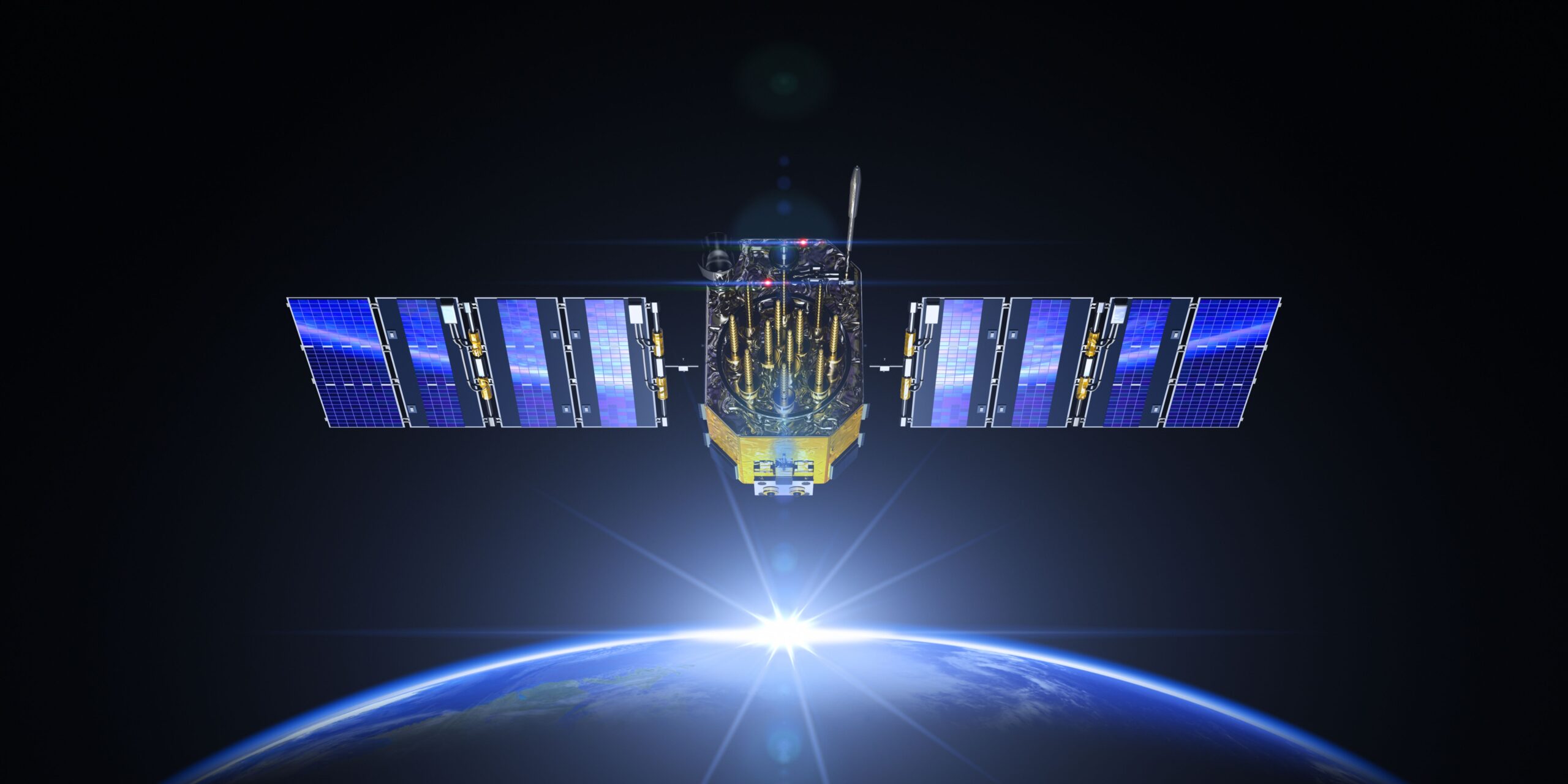
Satellites: more than 120 under development in Africa for launch by 2030
September 25th 2025
African space programs are emerging as a driver of growth and innovation. But between economic promises and budgetary constraints, the equation remains delicate: how to transform the conquest of space into concrete benefits for populations.
In recent years, satellites and space programs have become concrete tools for security, connectivity, and development in Africa. According to a report by the African Center for Strategic Studies (ACFSS), dated September 9, 2025, African states devote approximately $500 million annually to their space programs. A high figure for a continent still facing challenges of poverty, education, and health. But behind these investments lie major strategic issues: sovereignty, resilience, and place in the global digital economy. Among the leaders in space are Egypt, South Africa, Nigeria, Morocco, Algeria, and Angola, which have all made sustained investments in the field. Their programs encompass Earth observation, communications, and scientific satellites, often supported by international partnerships. South Africa is even collaborating with NASA on the Artemis program, which aims to return to the Moon and explore Mars.
The continent has more than 120 additional satellites under development, with launch planned by 2030. ACFSS reports that currently, more than 21 African countries have established space programs and 18 have launched at least one satellite. The continent has launched a combined total of 65 satellites (including CubeSats).

Infographic: African countries with space programs
Source: Space in Africa, ACFSS.
When technology meets everyday life
For many African governments, space is not a luxury, but a necessity. Satellites offer several use cases: they enable border surveillance, combat terrorism, smuggling, and illegal fishing. They provide unprecedented visibility over vast and sometimes difficult-to-access territories, where land patrols prove ineffective. At sea, satellites are becoming the guardians of Africa’s exclusive economic zones, plundered for decades by foreign fleets. On land, they help track illegal mining and logging. Even wildlife protection benefits from satellite-tracked collars to combat poaching. In economies where agriculture often employs the majority of the workforce, space is emerging as a silent revolution. Satellites provide climate and agricultural data: rainfall forecasts, soil moisture monitoring, crop mapping. This information helps increase yields and reduce losses. In a continent regularly hit by droughts and floods, the ability to anticipate is becoming vital. Precision agriculture, powered by satellite images, is no longer a futuristic abstraction, but a practice already underway in Kenya, Nigeria, and South Africa.
Satellites also power everyday civilian uses: television, GPS, mobile telephony, and especially broadband internet in rural areas. Where fiber optics cannot reach, satellites fill the gap, connecting isolated schools and health centers. The COVID-19 pandemic has highlighted the importance of these tools: distance learning and telemedicine services have relied on satellite networks to reach otherwise disconnected populations. In March 2024, when submarine fiber optic cables were severed, disrupting internet services for several days in 13 West African countries, satellite services such as Starlink and NigComSat in Nigeria provided alternative connectivity, highlighting the strategic importance of space-based networks.
But the annual expenditures made in recent years on satellites are generating debate. Critics denounce these programs as redundant and costly, in countries where social needs remain immense. Indeed, the risk of “space prestige” is not absent: some governments want to demonstrate their modernity by launching their own satellites, while more economical solutions exist, such as purchasing data from commercial platforms, indicates the ACFSS. Rwanda, for example, has chosen to centralize access to this data rather than multiplying launches, concentrating its financial resources on several practical use cases.
Continental cooperation: AfSA as a compass
To avoid this fragmentation, the African Union inaugurated the African Space Agency (AfSA) in April 2025, based in Cairo, Egypt. Its mission: to harmonize national strategies, promote joint missions, pool costs, negotiate international partnerships, and ensure that space activities directly support the African Union’s Agenda 2063 vision for a prosperous and integrated continent. Initiatives such as the African Development Satellite Initiative (AfDev-Sat), led by Egypt, also illustrate this potential for collaboration. The program has already trained 71 engineers from 34 countries and opened its satellite assembly, integration, and testing facilities to its African partners. In parallel, AfSA is leading the Africa-EU Space Partnership, endowed with €100 million by the European Union, to strengthen African capacities in climate monitoring, agriculture, disaster risk management and private sector development, while ensuring African control of the data and systems it generates.
A new geopolitics of the stars
According to the ACFSS, the African space is also attracting major powers. China, Russia, the United States, and Europe see this new frontier as a sphere of influence. Beijing is financing and building satellites for several African countries, while Moscow launched Angosat-2 for Angola. Europe is banking on technical cooperation, and Washington is already including Africa in its lunar programs. This competition creates opportunities, but also risks: technological dependence, indebtedness, or loss of sovereignty if Africa does not define its own priorities.
For advocates of investment in African satellites, space is as much a tool for survival as it is a bet on the future. Security, agriculture, climate, education, connectivity—there are few areas that don’t depend on it. In the long term, not investing would mean letting others do so and increasing Africa’s dependence on foreign technological infrastructure. Critics urge caution. The $500 million invested annually could also fund hospitals, roads, or universities. The challenge, therefore, is to ensure that every dollar invested in space has a tangible return on its citizens’ lives.
Back