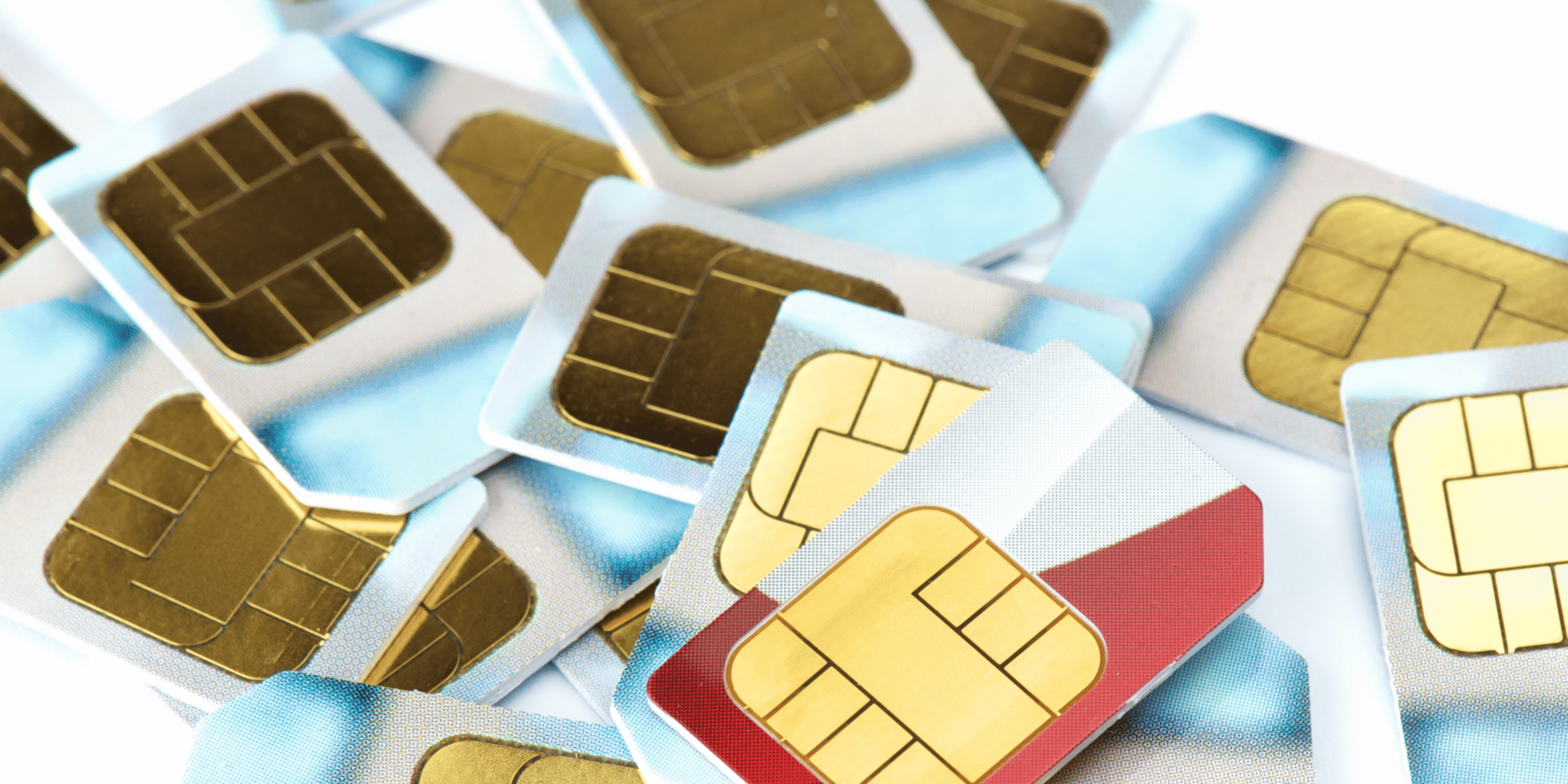
SIM cards disappearing in South Africa
October 9th 2025
Mobile networks in South Africa are seeing increased uptake of eSIMs due to the technology’s ease of use and the growing availability and popularity of smartphones with support for eSIMs.
eSIMs are digital SIM cards that can be downloaded and activated on phones with a reconfigurable built-in chip that behaves like a physical SIM card.
Users with eSIMs are able to quickly sign up to and move between dozens of different eSIMs without having to insert and remove physical cards.
eSIM support on smartphones has been around since 2016, initially on the Samsung Galaxy S2 Classic 3G, followed by the Google Pixel 2 in 2017.
The feature proved so popular with iPhone users in the US that Apple dropped physical SIM card trays completely from smartphones in that country, starting with the iPhone 14 in 2022.
With this year’s iPhone 17 models in the US, the company is using the extra space where the SIM card would be to add more battery capacity.
Its iPhone Air smartphone is also the first to drop the physical SIM card tray in all markets.
While initially reserved for flagship and premium devices, the feature has trickled down to mid-range and budget models priced from around R5,000.
There are also several affordable adapters available that can add eSIM capability thorugh a physcial card slot.
All but one of South Africa’s mobile network operators have added eSIM support on their networks in the past few years.
South Africa’s second-largest network, MTN, told MyBroadband it has seen a steady increase in eSIM uptake, driven by the increasing availability and popularity of smartphones that are eSIM-capable.
“While the majority of our customer base still uses physical SIM cards, the number of eSIM users continues to grow year-on-year as more devices enter the market with native eSIM support,” MTN said.
“We expect this trend to continue as digital lifestyles evolve and customers seek more flexibility, especially those using dual-SIM functionality or requiring remote provisioning for devices.”
Telkom could not give specific figures as it was in a closed period, but confirmed that eSIM activations were also growing steadily.
However, like MTN, physical SIMs remained the dominant option on its network. “As more devices become eSIM‑enabled, we expect adoption to continue accelerating,” Telkom said.
“The shift to eSIM also helps reduce plastic waste and packaging, supporting Telkom’s sustainability objectives and aligning with global technology trends.”
MVNOs leading the charge

Numerous mobile virtual network operators (MVNOs) also offer eSIM support. The technology is an ideal solution for these smaller operators, as it works well with their digital-first operating models.
One of the first MVNOs to offer eSIM support was Melon Mobile. The network told MyBroadband its eSIM adoption had accelerated dramatically in 2025.
In the year-to-date, uptake was 136% higher than in the same period in 2024, while overall year-to-date SIM registrations were up 39%.
“eSIM activations are growing 17% faster year-on-year than physical SIMs, a clear sign that digital provisioning is becoming the default choice for an increasing number of customers,” Melon Mobile said.
The network attributed the growth to the broader availability of eSIM-enabled devices and its fully digital, friction-free activation process.
Internet service provider (ISP) Afrihost said that its Air Mobile customers were currently split about 50/50 between eSIMs and physical SIMs.
“The uptake of eSIMs for 2025 has been steady every month and in line with our physical SIM sales,” the ISP said.
The fact that eSIM uptake is on par with physical SIM cards is impressive considering Air Mobile only added support for the feature with its relaunch in early 2025. The MVNO has been around since 2013.
Afrihost said it was monitoring what devices like the new iPhone Air will do to the market. “That phone is eSIM only, and other manufacturers may follow suit, driving an uptake in eSIMs,” Afrihost said.
FNB Connect CEO Sashin Sookroo also told MyBroadband that the MVNO had seen healthy demand for eSIMs since launching the feature on its app about a year ago.
“This is evident in the 127% sales growth rate we’ve seen since launch, with eSIMs now making up 10% of the total monthly FNB Connect SIM sales volumes,” Sookroo said.
“eSIM growth currently exceeds physical SIM growth, and eSIMs are steadily gaining share as device compatibility expands.”
In addition to its domestic eSIM, FNB offers a Global Travel prepaid eSIM to enable customers to get connected in more than 240 countries or regions worldwide.
“Since its launch, the Global Travel eSIM has also demonstrated strong and sustained growth, with usage increasing by approximately 20% month-on-month,” Sookroo said.
Back