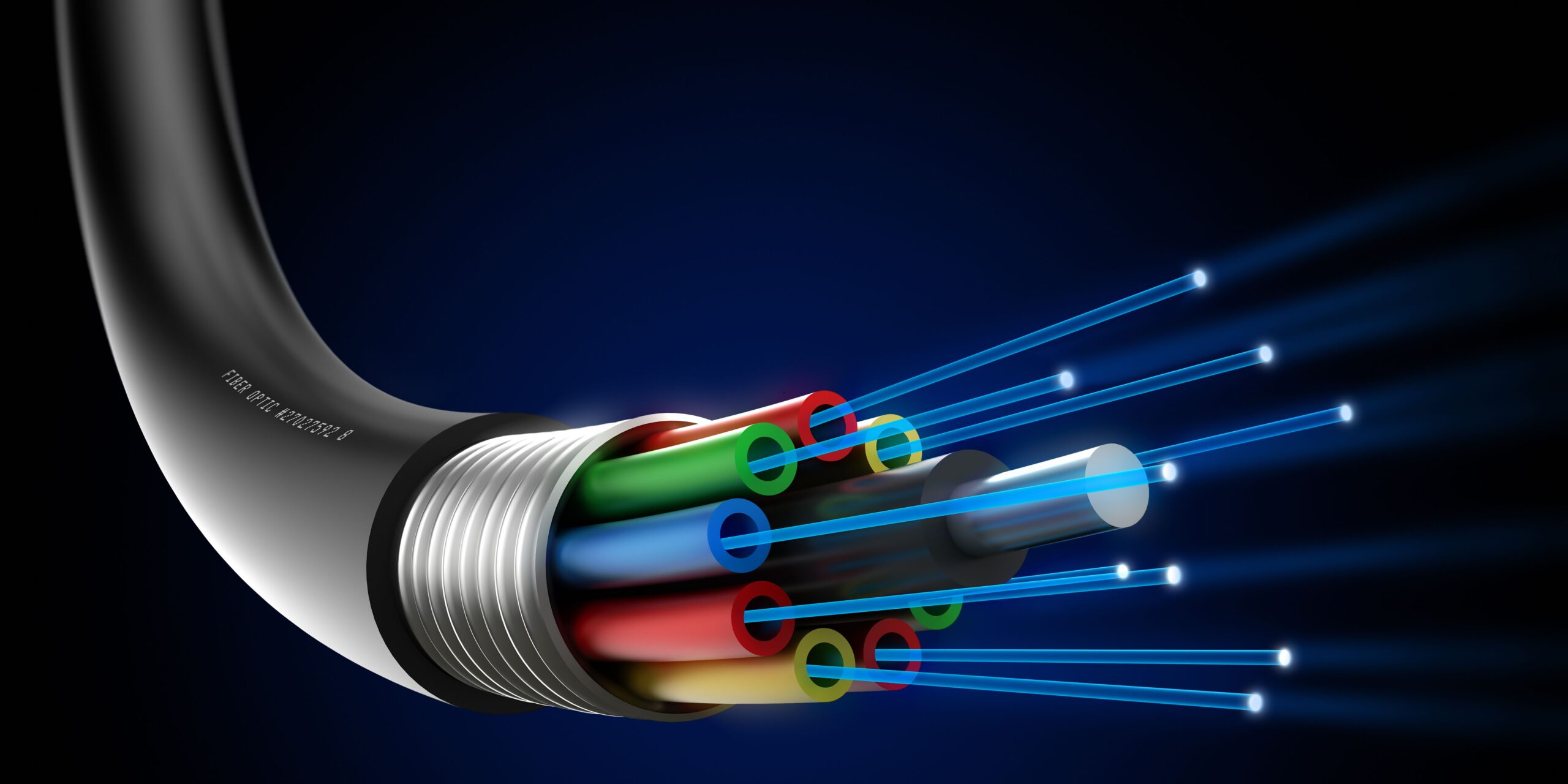
New Fibre Service Deployed in Egyptian Homes With Huawei Deepens a Dependence That Runs Under the Red Sea
May 26th 2026
- Telecom Egypt and Huawei launched Fiber-to-the-Room service on May 24, 2026, extending fibre to individual rooms in homes
- The consumer launch adds another layer to Egypt’s growing reliance on Huawei across its telecom stack, from 5G to subsea systems
- Egypt carries an estimated 95% of Asia-to-Europe internet traffic, making each technology choice a strategic one
On May 24, 2026, Telecom Egypt (WE) and Huawei announced Fiber-to-the-Room (FTTR), a service that pushes fibre-optic cabling into individual rooms to kill the dead zones and slowdowns that plague large, multi-storey homes, according to statements carried by Egypt’s State Information Service and Ahram Online.
On its face, this is a routine consumer upgrade aimed at gamers, remote workers and 4K streamers. WE’s chief consumer officer Mohamed Eltouny called it “a defining milestone” in the operator’s digital-services push, while Huawei’s Egypt carrier-business deputy chief Louis Lu tied it to the country’s Vision 2030 strategy. Huawei has operated in Egypt for more than 25 years.
But the FTTR launch is the visible, domestic tip of a far larger and more strategic relationship — and that is where the real story sits. Telecom Egypt and Huawei have steadily built out the entire telecom stack together: a 5G partnership unveiled at Mobile World Congress 2024, plus trials of next-generation DWDM and 50G PON optical technology, according to Ecofin Agency’s own earlier reporting. Layer by layer, a single Chinese vendor is building the backbone of Egypt’s digital economy, from core infrastructure to the final in-home connection.
That dependence acquires geopolitical weight because of where Egypt sits. The country is the world’s most important subsea cable junction. As of 2025 it was connected to 15 operational submarine cables with three more under construction, according to industry tracker DatacenterDynamics, and Telecom Egypt has historically said it carries around 95% of internet traffic between Asia and Europe. A January 2026 study by the Center for Strategic and International Studies (CSIS) noted that Chinese state-owned firms — China Mobile, China Telecom, China Unicom and Huawei — have gained control of a growing share of global subsea cables, and that the MENA region has become a strategic focus of Beijing’s Digital Silk Road.
The fragility is not theoretical. CSIS documented that four undersea cables in the Red Sea were severed in March 2024, disrupting an estimated 25% of telecoms traffic between Asia, Europe and Africa; further cuts in September 2025 degraded connectivity across the Gulf and South Asia. Every component Egypt entrusts to one supplier raises the stakes of these chokepoints.
For Egypt, the trade-off is real and uncomfortable. Chinese vendors are fast, cheap and willing to finance. That supports Cairo’s ambition to become the digital corridor linking three continents. The U.S. Trade Administration projects Egypt’s data-centre sector will grow from $278 million in 2024 to $694 million by 2030.
But the cost is concentration risk and reduced technological neutrality at the precise point where the world’s data flows narrow. The FTTR rollout alone will barely register in that equation. Yet it is another brick in a wall that, brick by brick, is reshaping who holds the keys to one of the internet’s most strategic crossroads.
Back