The Starlink service that can revolutionise mobile connectivity in South Africa
May 26th 2026
SpaceX’s Starlink Mobile service could help reduce mobile dead spots in South Africa, particularly in remote areas with weak terrestrial coverage.
The company described Starlink Mobile in its recent S-1 filing ahead of its planned initial public offering (IPO).
An S-1 filing is the initial registration statement required by the U.S. Securities and Exchange Commission (SEC) for companies planning to list their shares.
In the document, SpaceX described Starlink Mobile as a satellite-to-mobile service that connects directly to regular smartphones, supplementing terrestrial mobile networks such as Vodacom and MTN.
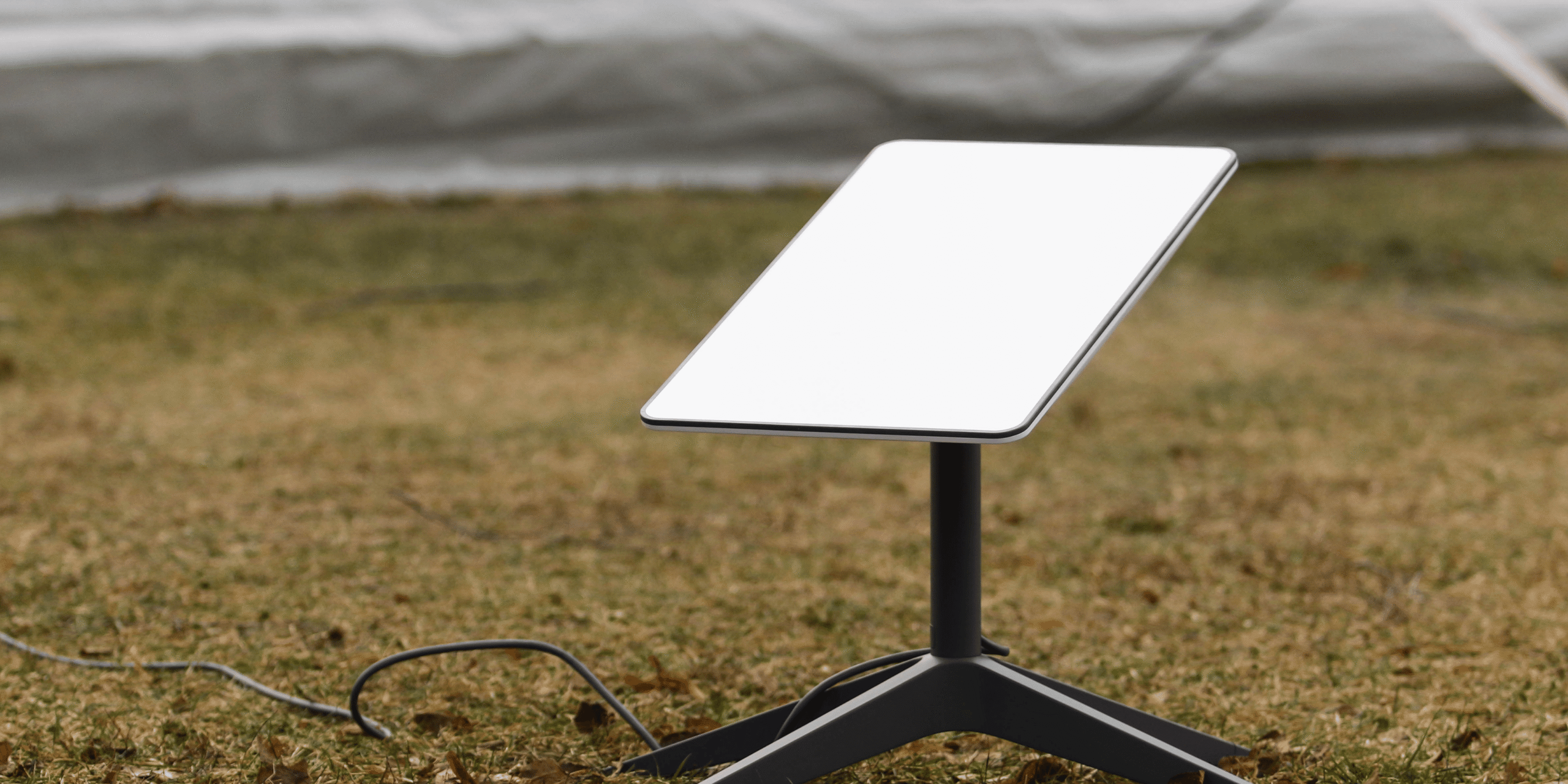
Unlike Starlink’s broadband service, which requires a Starlink Kit, Starlink Mobile is designed to work with existing phones through partnerships with mobile network operators (MNOs).
SpaceX said it had partnered with approximately 30 MNOs on six continents, enabling satellite-to-mobile data, over-the-top voice, and messaging services.
Over-the-top voice is an industry term for voice-over-IP services such as those offered by WhatsApp, Telegram, Signal, Discord, and Zoom.
As of 31 March 2026, Starlink Mobile served around 7.4 million monthly unique devices across approximately 30 countries, according to the filing.
SpaceX said it had around 650 dedicated version 1 (V1) Mobile satellites, separate from Starlink’s broader broadband constellation of roughly 9,600 low Earth orbit broadband satellites.
“We enable consumers, businesses, and public-sector customers to use their existing phones in more places… and open new applications for low-bandwidth mobile and IoT devices,” SpaceX stated.
The main benefit for mobile operators partnering with Starlink is that they can extend coverage without building expensive towers, fibre backhaul, and power infrastructure in remote areas.
For users, the benefit is straightforward: ordinary phones could remain connected for messaging, data, and voice services in places where signal usually disappears.
That would be particularly relevant in South Africa, where remote travel routes, farms, lodges, mines, and conservation areas often sit beyond reliable mobile coverage.
SpaceX also said Starlink Mobile could support critical connectivity during disasters and power outages, where terrestrial infrastructure may be damaged or unavailable.
Plugging South Africa’s big rural coverage gap

In South Africa, the strongest use case would be in sparsely populated regions where traditional mobile network expansion is difficult to justify on commercial grounds.
Large parts of the country have limited or no cellular coverage, especially in areas like the Karoo and Kalahari deserts.
Nature reserves, game farms, and mountain areas face similar problems. Coverage gaps can affect staff, tourists, emergency responders, and conservation operations.
Although Vodacom, MTN, and Telkom boast 99% population coverage across their 4G networks and continually increasing 5G coverage, large parts of the country remain without signal.
That is because there are very sparsely populated areas where a tower may provide coverage for only one family’s home.
South Africa’s main roads generally have excellent coverage, but homesteads and villages just a few kilometres away from a major route often have no signal.
Starlink Mobile could help close those gaps by enabling local mobile operators to offer satellite fallback coverage through normal consumer devices and cellular service plans.
Its cellphone towers in space would not necessarily replace regular towers in towns, suburbs, or dense urban areas, where terrestrial networks remain cheaper and higher-capacity.
Terrestrial network signals also penetrate indoors, allowing people to use their devices without installing antennas or boosters inside many buildings.
Therefore, Starlink Mobile’s technology is best suited to uncovered or poorly covered areas where building and maintaining conventional network infrastructure is expensive.
A R12.1-trillion market

SpaceX said it calculated the total addressable market of Starlink Mobile at $740 billion (R12.1 trillion) and its regular Starlink Broadband service at $870 billion (R14.2 trillion).
It calculated the addressable market by making several key assumptions about average revenue per user (ARPU) based on consumer purchasing power worldwide.
“We assume a different monthly ARPU for different parts of the world as we seek to make our service affordable and accessible across different economic development contexts,” SpaceX explained.
“Our region-specific ARPU assumptions result in a weighted average monthly mobile ARPU of $8 per user.” That equates to roughly R130 per user month.
SpaceX said this global average comprised a weighted-average monthly ARPU of $18 in high-income markets, $5 in upper-middle income markets, $2 in lower-middle, and $2 in low-income markets.
It then estimated the Starlink Mobile market opportunity based on the total number of connected devices globally and the mobile ARPU.
SpaceX said this next-generation system is intended to eventually provide 5G connectivity to unmodified cellphones and IoT devices globally.
However, it said full 5G New Radio — Non-Terrestrial Networks performance may require handset manufacturers to add hardware and software support in future devices.
SpaceX said its near-term international strategy depended on market-by-market MNO spectrum partnerships, which avoid the need for immediate handset hardware changes.
However, SpaceX also revealed greater ambitions in its filing. It said that although its service was currently most useful in remote areas, the next generation of its technology would expand its proposition.
“We will compete to be the preferred connectivity experience to our customers, no matter where they are located, whether in rural, suburban, or urban areas,” SpaceX said.
Back