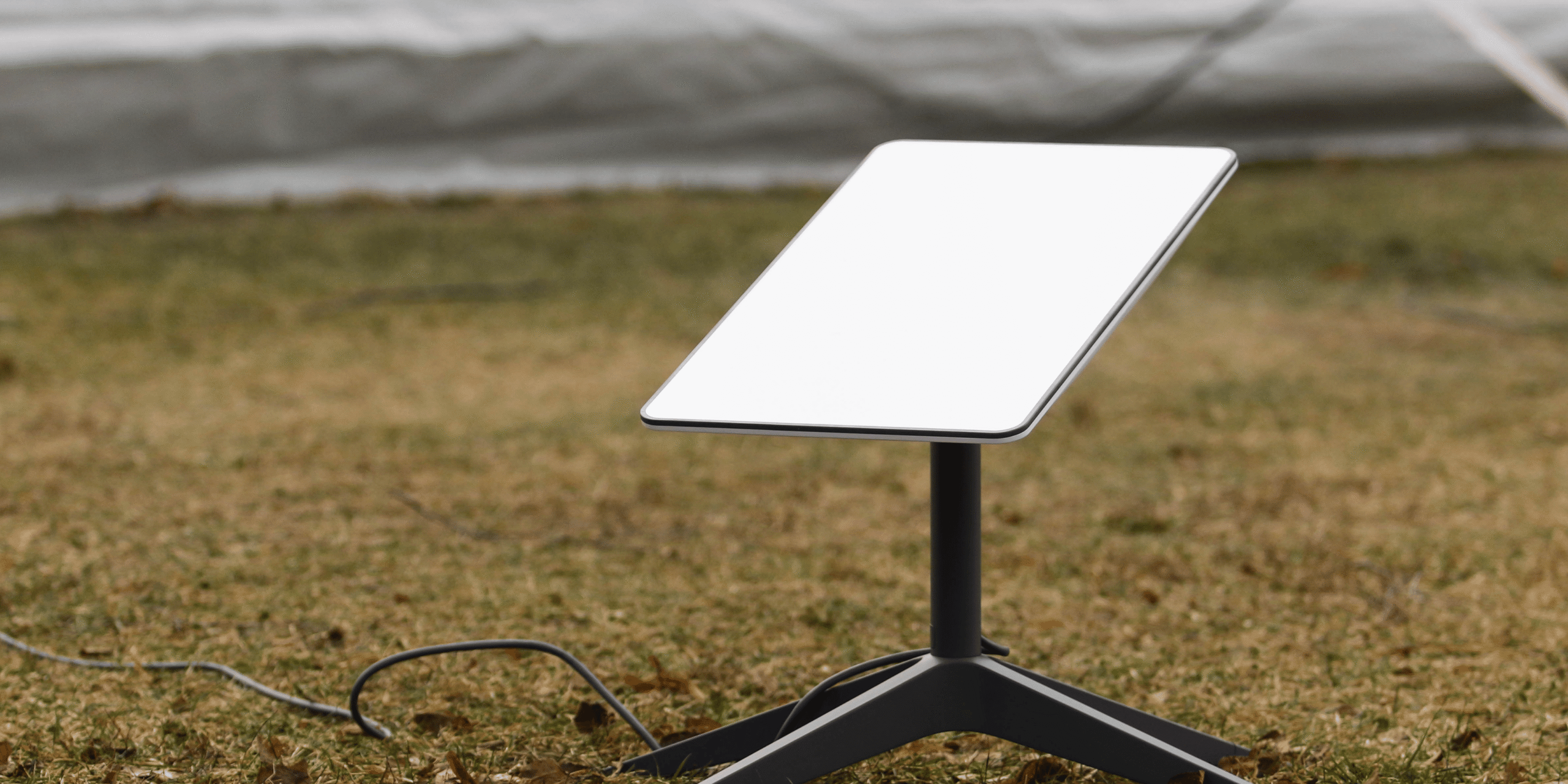
Satellite internet: Starlink targets 16 new African markets by the end of 2026
September 1st 2026
Starlink continues its African expansion, officially launched with Nigeria in January 2023. The subsidiary of the American company SpaceX, owned by billionaire Elon Musk, is already present in more than half of the countries on the continent.
American satellite internet provider Starlink plans to launch its services in 16 new African countries by the end of 2026, according to its official availability map. The company recently established a presence in Equatorial Guinea, bringing the number of African markets where its services are available to 29.
The next wave of Starlink expansion is expected to include Mauritania, Mali, Gambia, Guinea, Burkina Faso, Togo, Tunisia, Uganda, Tanzania, Comoros, Namibia, Angola, Congo, Gabon, Cameroon and Mauritius.
For these countries, the company does not specify an exact launch date. When you hover over one of these countries on the map, the message “Starting in 2026” appears. Furthermore, they are displayed in dark blue, which, according to the map’s availability legend, indicates pending service coverage or regulatory approval. Countries where the service is already available are shown in light blue.
A technology that addresses the limitations of terrestrial networks
Starlink is continuing its expansion in Africa, where satellite connectivity is being touted as a solution to bridge the digital divide on the continent. The company, like its competitors, is banking on this technology to bring connectivity to rural and remote areas, often difficult to serve with traditional terrestrial networks.
This prospect is of interest to several African countries facing still incomplete coverage of their territories. Across the continent, approximately 25% of the population was not covered by 4G in 2025, according to the International Telecommunication Union (ITU). The internet penetration rate, meanwhile, was around 35.7%.
Significant disparities remain between countries. In Mauritania, for example, 4G coverage was projected to reach 80% of the population by 2025, with an internet penetration rate of 45.8%. In Burkina Faso, 68.3% of the population had 4G coverage, but only 28.3% used the internet.
Beyond coverage, satellite solutions can also address challenges related to the quality of available connections. In several African markets, users continue to face inadequate internet services while connectivity needs continue to grow, both for professional use and everyday activities.
These forecasts may still change
The sixteen countries are those for which Starlink currently shows a launch prospect from 2026. This indication, however, does not constitute a guarantee of availability during the year, as shown by the company’s deployment schedule in recent years.
Congo, Gabon, Togo, Guinea, Mali, Burkina Faso, Tunisia and Mauritania were among the markets for which Starlink had announced availability by 2025. Yet, the service is still not available there.
” The estimates are based on current forecasts and assumptions and remain subject to approval by public authorities as well as network expansion. They are likely to be affected by risks and uncertainties. If these risks or uncertainties materialize, or if the underlying assumptions prove incorrect, the actual availability of the service could differ from these estimates ,” the company states.
For other African markets, including South Africa, no launch date is yet shown on the availability map. However, this does not mean that Starlink cannot launch its services there before some of the countries currently announced for 2026. The Central African Republic provides an example: as of June 25, 2025, it was not among the markets announced for the short term. But Starlink officially launched its services there in March 2026.
Back